When Your Kid Says I Hate You: What It Means and How to Respond
By Jennifer C. Williams, LCPC, PMH-C
Parenting Corner
"I HATE YOU."
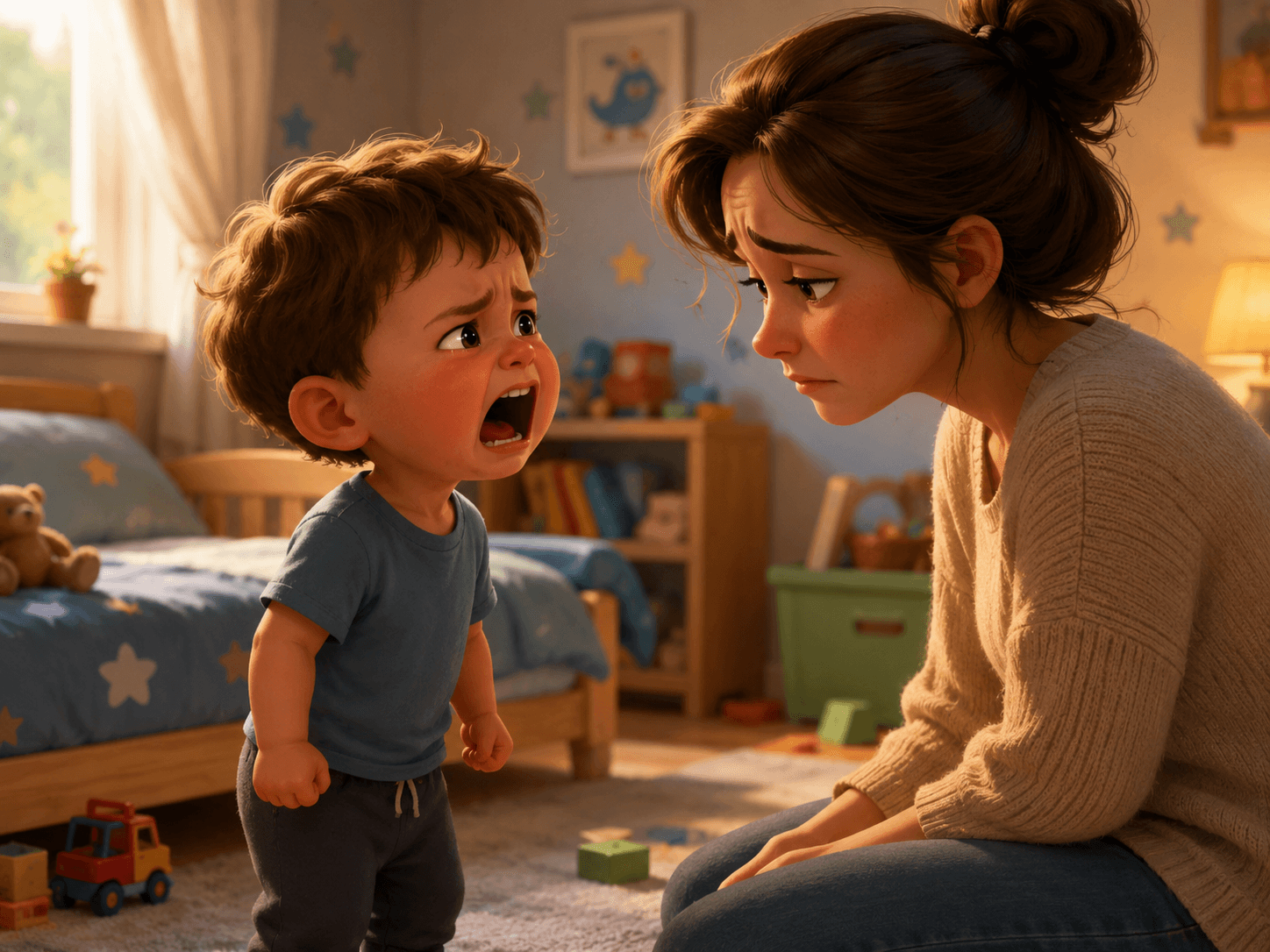
Your kid screams it. The door slams. You stand in the hallway, fork in hand or coffee gone cold, and feel the punch land right in your chest.
If you have heard those words and felt your heart break, this is for you.
Here is what I tell parents in my therapy practice: when your kid says "I hate you," they are not telling you about your relationship. They are telling you about their nervous system. And how you respond shapes everything that comes after.
Let me walk you through it.
What Your Kid Is Actually Saying
"I hate you" is rarely about hate.
It is a developmentally normal phrase that emerges when kids:
Feel powerless in a situation
Are overwhelmed by big feelings
Lack the vocabulary to name what is actually wrong
Want a reaction from you (and they know this phrase gets one)
Are testing whether your love is conditional
Are exhausted, hungry, or overstimulated
Feel disconnected and want to push you away before YOU leave them
What they actually mean is usually:
"I do not like what is happening right now"
"You are not letting me do what I want"
"I feel out of control"
"I am so frustrated I cannot find better words"
"I want to see if you will leave me when I am unlovable"
That last one is heavy. But it is real. Kids often push hardest right before they need the most reassurance.
Why It Hurts So Much
Even when you KNOW it is developmental, the words still hurt.
Here is why.
You poured yourself out for this kid. The sleepless nights. The packed lunches. The doctor appointments. The bedtime stories you read 47 times. The bills you paid so they could have what they needed.
And the thanks you get? "I hate you."
It feels like rejection of the deepest kind.
But here is the truth: the fact that your kid feels safe enough to say those words means your relationship is STRONG. A kid who is afraid of you would never risk it. A kid who feels unloved would have stopped trying long ago.
"I hate you" from your child is, paradoxically, a sign of attachment. They trust your love enough to test it.
That does not make it feel better in the moment. But it might help you respond better when you understand what it means.
How Most Parents React (And Why It Backfires)
Common reactions to "I hate you" include:
Hurt back. "Well, I do not like you very much right now either." This validates that love is conditional. Bad.
Punishment. "You are grounded for saying that." This teaches them to hide their real feelings, not to manage them.
Guilt trip. "After everything I do for you?" This shifts the focus to your hurt instead of their dysregulation.
Dismiss. "No you do not." This invalidates their experience and teaches them their feelings are wrong.
Escalate. Yelling, slamming back, threatening. Now two nervous systems are dysregulated.
Withdraw. Going silent, leaving the room without repair. This confirms their fear that love disappears when things get hard.
None of these teach your kid what you actually want them to learn. Which is: big feelings are survivable, love is unconditional, and we use words to express ourselves.
The Pass Go Regulation Method™ for "I Hate You" Moments
In my therapy practice, I use a framework I call The Pass Go Regulation Method™. Regulate. Repair. Reconnect.
Here is how it applies to those words.
Phase 1: Regulate (Yourself First)
Before you respond, breathe.
Your kid just delivered a verbal grenade. Your nervous system wants to react. Don't.
What to do:
Pause. Take 3 seconds. Do not say anything yet. Your first instinct is often your worst one.
Breathe. Slow your exhale. This is the fastest way to calm your nervous system.
Remind yourself. They are dysregulated. This is not about me. This is a small person with big feelings.
Drop the personal hurt. Your kid is not capable of "hate" the way an adult is. They are using the biggest word they know for the biggest feeling they have.
If you cannot regulate in the moment, that is OK. Walk away briefly. "I am going to take a minute. We will talk in a few." That models regulation.
Phase 2: Respond (Calm and Clear)
Once you are regulated, you can respond. Try one of these.
Acknowledge the feeling. "You are really mad right now. Something feels really unfair."
Name what is underneath. "You wanted to keep playing and I said no. That feels awful."
Affirm the love. "I love you even when you are mad at me. That does not change."
Offer the truth. "I do not think you hate me. I think you are really, really upset. Those are different."
Set the limit (gently). "It is OK to be mad at me. It is not OK to scream at me. Let's try different words when you are calm."
You do not need to lecture. Pick ONE response. Keep it short. Their brain is not ready for a lot of words.
Phase 3: Repair and Reconnect
Later, when everyone is calm, go back to them.
Sit close. Look them in the eye. Say something like:
"That was hard earlier. You were really mad. I love you no matter what. Can we talk about what we could try next time when you feel that big?"
Then listen. They might tell you what they actually needed. They might not. Either way, you have just built trust.
If THEY want to apologize, accept it. If they do not, do not force it. The repair is in the connection, not the apology.
End with reconnection. A hug. A story. A walk. Whatever fits.
What to Say in the Moment (Scripts)
If your brain freezes when your kid says it, memorize one of these:
"I hear you. You are really mad."
"That was a big feeling. Want to tell me what's really going on?"
"I love you. Even when you do not love me right now."
"Sounds like something really unfair happened. Help me understand."
"I am still here. I am not going anywhere."
"You can be mad at me. I can still love you."
Pick one. Practice it in a calm moment. Use it when you need it.
What to Teach Long-Term
Over time, your kid CAN learn to use better words. But it requires consistent teaching.
When they are calm (NOT mid-meltdown), have small conversations.
"Remember when you said you hated me? I do not think you really hate me. I think you were really frustrated. What's another way you could say that next time?"
Brainstorm together. "I am SO mad." "This is not fair." "I really need a minute." "I do not like this rule."
Practice these phrases during calm times. Then when a big feeling comes, they might reach for one of them instead of the nuclear option.
Will they get it perfect? No. But over time, "I hate you" will become rarer.
What If Your Kid Says It Often?
If "I hate you" is a daily refrain, look for patterns.
Is the relationship struggling? Check for connection. Are you spending one-on-one time together? Are you saying yes more than no? Have you repaired after recent ruptures?
Is the family system stressed? Divorce, illness, financial pressure, a new sibling, a recent move. Kids absorb stress and project it.
Is your kid struggling internally? Anxiety, depression, sensory overload, ADHD, social struggles at school. The "I hate you" might be a symptom of bigger overwhelm.
Is there a pattern around limits? Are they only saying it when you say no to specific things (screens, food, leaving the park)? That might be a power struggle issue more than a feelings issue.
When you see a pattern, you can intervene at the root.
When to Get Help
Most "I hate you" phases pass. They are developmentally normal.
But sometimes it points to something bigger. Talk to a child therapist if you notice:
"I hate you" multiple times a day for weeks or months
Threats of self-harm or harm to others
Significant changes in mood, sleep, appetite, or behavior
Loss of interest in things they used to love
School refusal or social withdrawal
Family conflict that feels unmanageable
Your own emotional health is suffering from the dynamic
A skilled therapist can help you both find new patterns. You do not have to navigate this alone.
What Your Kid Will Remember
Your kid will not remember the words they said.
They will remember how you responded.
If you yelled back, they will remember that love is fragile.
If you punished them harshly, they will remember that feelings are dangerous.
If you walked away and did not repair, they will remember that they are abandonable.
But if you stayed close. If you said "I love you even when you are mad." If you came back to them when the storm passed. If you held the line on respect while holding the line on love.
They will remember that.
And that memory will shape how they treat the people they love for the rest of their lives.
Your Quick Action Plan
The next time your kid says "I hate you," pause before responding
Take 3 slow breaths
Remind yourself: this is not about me, this is dysregulation
Pick ONE short response from the scripts above
Avoid lectures, punishment, or matching their energy
Give space if needed, but do not abandon the relationship
Repair later when everyone is calm
Have ongoing conversations about better words to use
Look for patterns if it keeps happening
Get professional support if it feels unmanageable
The Bottom Line
Your kid does not hate you.
They are a small, growing human trying to manage feelings bigger than their vocabulary. They are testing whether your love can survive the storm. They are practicing power. They are still becoming themselves.
Your job is not to stop the words. Your job is to be the steady, regulated, loving presence that proves to them: love does not disappear when things get hard.
That is the lesson.
And every time you stay grounded through one of these moments, you are building the kind of relationship that lasts a lifetime.
You are not failing.
You are doing the hardest, most important work there is.
Sources
Siegel, D. J., & Bryson, T. P. (2011). The whole-brain child: 12 revolutionary strategies to nurture your child's developing mind. Delacorte Press.
Wang, M. T., & Kenny, S. (2014). Longitudinal links between fathers' and mothers' harsh verbal discipline and adolescents' conduct problems and depressive symptoms. Child Development, 85(3), 908-923. pubmed.ncbi.nlm.nih.gov